

Why asking for feedback immediately after service gives more honest, more helpful answers – and how to design a short counter survey.
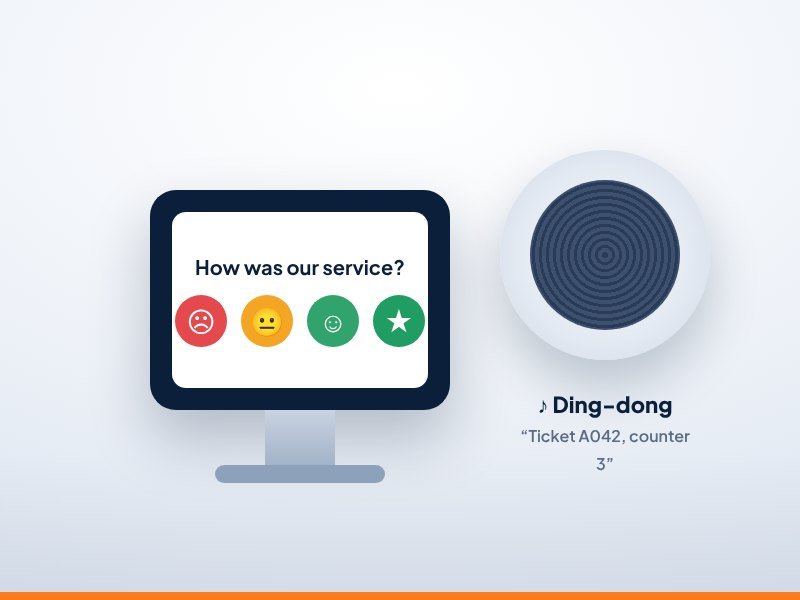
Most institutions ask for feedback by e-mail days after a visit. By then, few individuals answer, and those who do remember mainly the best or worst moment. Asking at the counter, right after service, gives a fuller and fairer picture.
Why the counter is the correct place
- Higher response – a few taps while still at the desk.
- Fresh memory – visitors rate the service they just received.
- Precise data – every answer is linked to the branch, service and team member.
Designing a good counter survey
- Keep it short. One principal question, with at most two follow-ups.
- Use straightforward scales. Faces or 1–5 stars work in any language.
- Ask follow-ups only when needed. If somebody rates low, ask what went wrong; if they rate high, thank them.
- Vary questions by visitor group – a new customer and a regular need various questions.
- Close the loop. Review results weekly and tell team what changed as of them.
Feedback plus queue data
The real value comes from combining feedback with waiting and handling times. If satisfaction drops whenever wait time passes 12 minutes, you have a clear, measurable service target.
The FEED-TT-10 feedback device integrates directly with QVista, so every answer appears in the same reports as your queue data.
You may also like
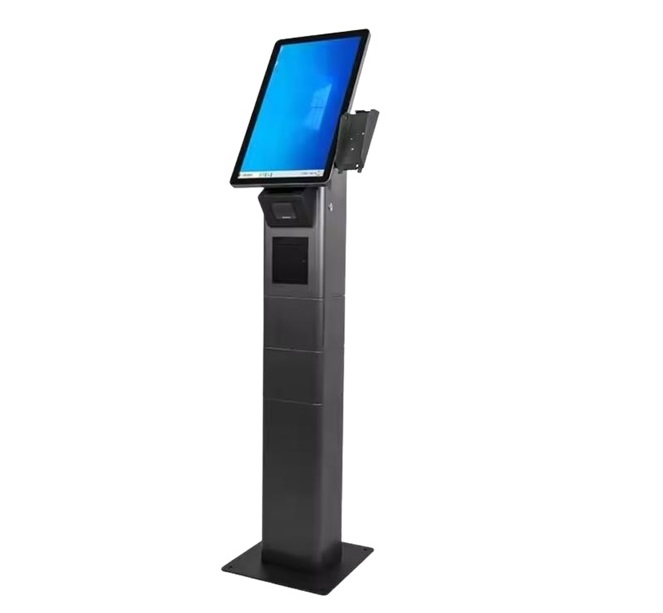
What Is a Queue Management System? A Hands-on Handbook
What a queue management system is, which parts it has, how it works one step at a time and how to tell whether your institution needs one.

7 Ways to Cut Patient Wait Time in Hospitals
Hands-on steps clinics and hospitals can take to shorten patient wait times, from multi-step patient flow to appointment mixing and live monitoring.

Virtual Queue vs Physical Queue: Which Is Right for You?
The difference between virtual and physical queues, their pros and cons, and why most businesses end up combining the two.