

How visa application centres, consulates and passport offices combine appointments, ID-based check-in, multi-step counters and live dashboards to serve applicants on time.
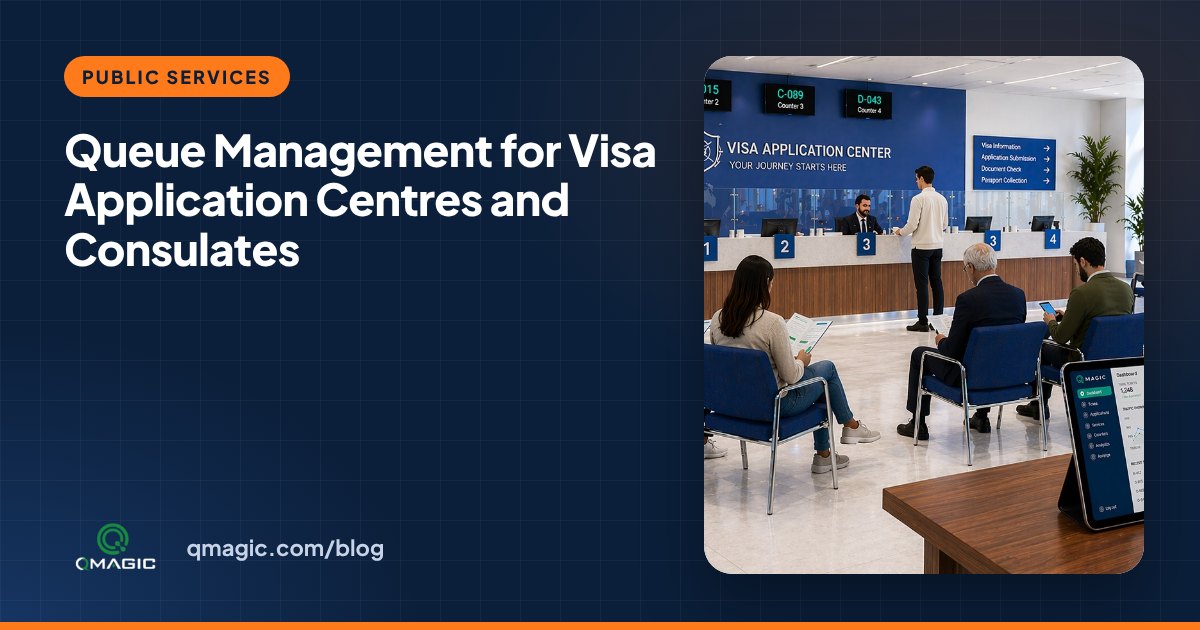
Visa application centres, consulates and passport offices serve applicants who are frequently nervous, sometimes travelling from far away, and almost always on an appointment. One late morning can push hundreds of appointments back. A well-designed queue system keeps the day on schedule and gives applicants a calm, predictable experience.
Appointments first, walk-ins second
Most applicants have booked a slot online. At the entrance they check in on a kiosk by scanning the barcode on their appointment letter or entering their reference number. The system recognises the appointment and places the applicant in the right queue at the right time. Walk-in services like document collection or enquiries get their own ticket series.
Multi-step journeys with one number
A typical visit has several steps: document check → biometrics → payment → submission. With multi-step queues, the applicant keeps one ticket number throughout. When one step closes, the number automatically joins the next queue, and displays guide the applicant to the right room.
Clear calling in several languages
Main displays and spoken announcement in the languages of the host country and the destination country make certain nobody misses their call. Counter displays show the number being served at every window.
Premium and priority services
Many centres offer premium lounges, fast-track services or priority for families and elderly applicants. Each gets its own service rules and counters, so the main hall still runs in a visibly fair order.
Live control for supervisors
A live dashboard presents checked-in applicants, waiting times per step and counters that are idle or overloaded. Supervisors can move staff between steps during the day instead of discovering the problem in the evening report.
Reports for the mission
Daily and monthly reports show applicants per visa type, waiting and processing time per step, no-shows and late arrivals. These figures help plan appointment capacity for the crowded summer season.
Data protection
Applicants are called by number, not by name. The system can run on-premises so that personal data stays within the centre’s own network, in line with the data-protection rules of both countries.
QVISTA queue systems run in public service halls and government institutions. Get in touch to discuss your centre.
Frequently asked questions
How do applicants check in for a visa appointment?
At a kiosk, by scanning the barcode on their appointment letter or typing their reference number. The system then places them in the correct queue.
Can one ticket cover several steps of the visit?
Yes. Multi-step queues keep one ticket number from document check to biometrics, payment and submission.
Can the system announce calls in more than one language?
Yes. Displays and spoken announcement can use several languages simultaneously.
You may also like
How Much Does a Queue Management System Cost? 9 Factors That Set the Price
What really drives the price of a queue management system – kiosks, displays, software licences, integrations and support – and how to budget without surprises.
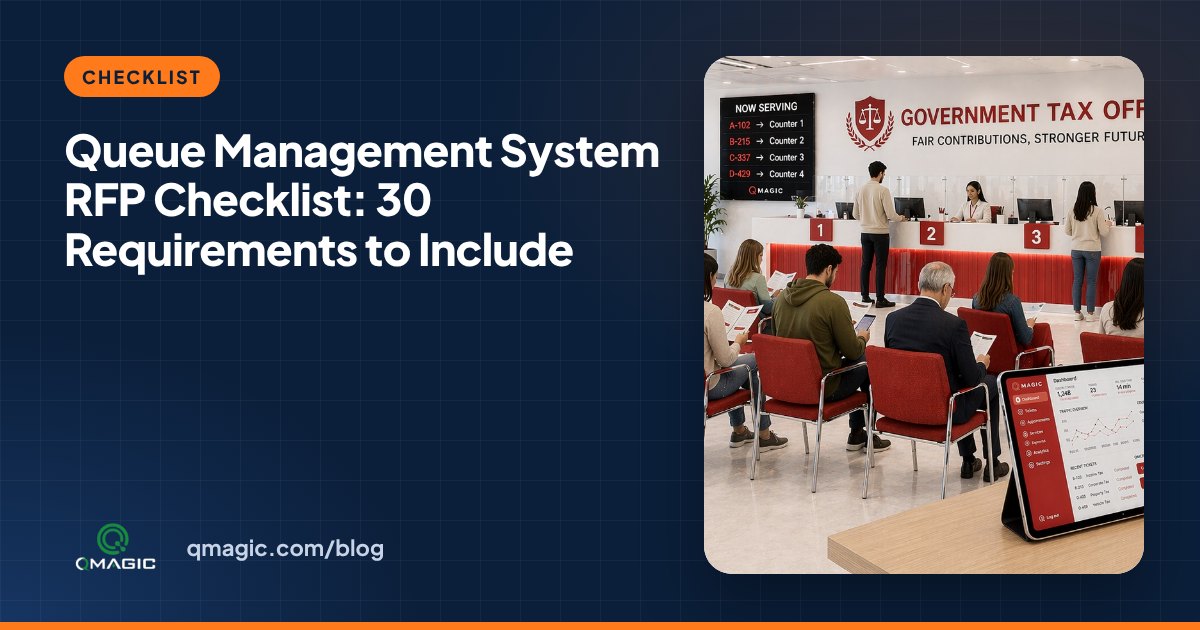
Queue Management System RFP Checklist: 30 Requirements to Include
A ready-to-use checklist of 30 requirements for a queue management system tender or RFP – hardware, software, integrations, security, reporting and support.
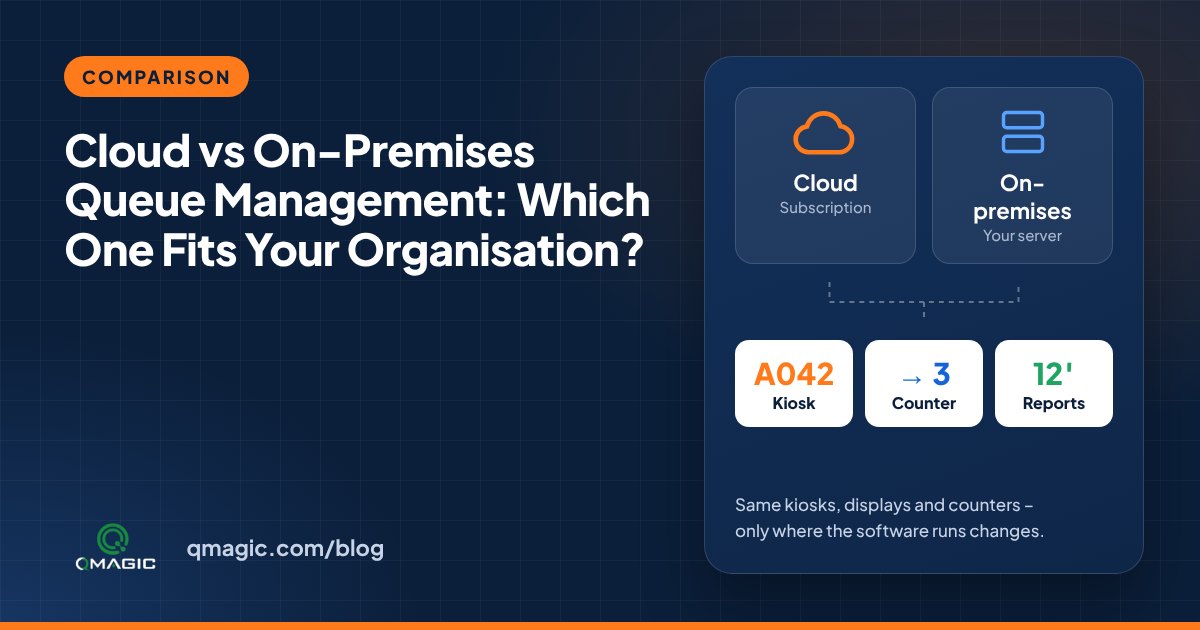
Cloud vs On-Premises Queue Management: Which One Fits Your Institution?
Cloud or on-premises? A clear comparison of the two ways to run a queue management system – cost, security, internet dependency, integration and multi-site control.