

The real benefits of a queue management system – shorter waits, calmer waiting rooms, balanced team workload, better data and lower costs – with the numbers to measure each one.
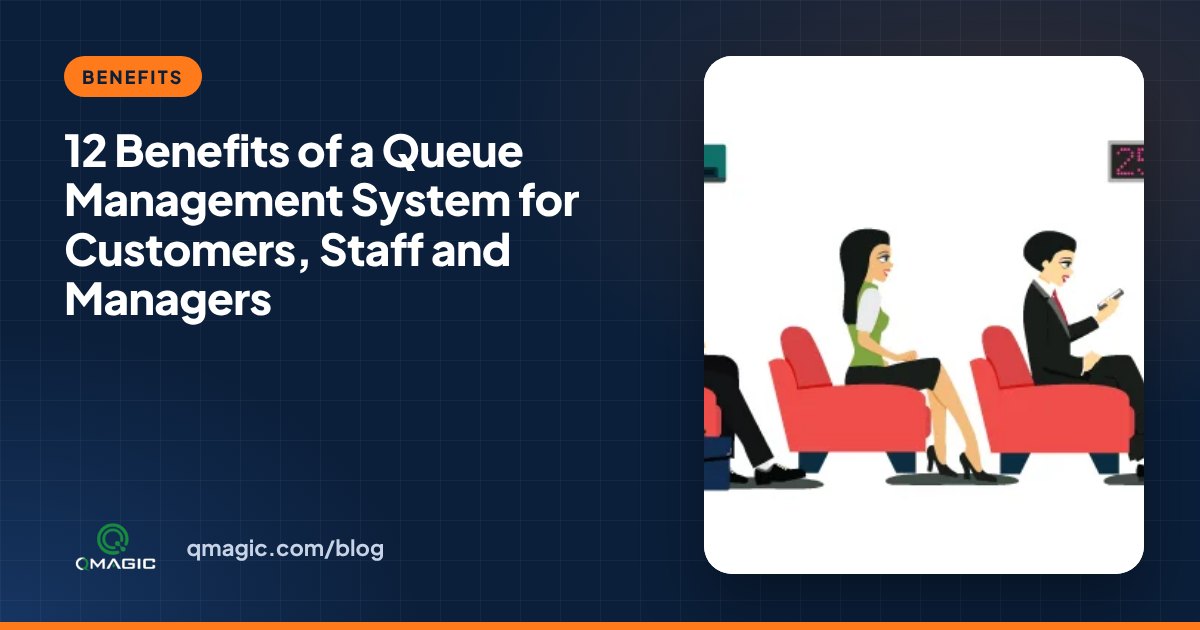
A queue management system is frequently bought to solve one visible problem: a crowded waiting room. Once it is running, most organisations explore that the bigger benefits are behind the scenes – in how personnel are scheduled, how services are designed and how decisions are made. Here are the 12 benefits we see most frequently, grouped by who gains from them, with an easy way to measure every one.
Benefits for clients and visitors
1. Shorter actual waiting time
Routing every visitor to the right counter first time, and calling the next person the moment a counter is free, removes idle gaps that add up across a day. Measure it with the average and 90th-percentile waiting time per service before and after installation.
2. Shorter perceived waiting time
Individuals tolerate waiting far better when they know their position and expected wait, can sit down, and have something to look at. Clear displays, estimated times and digital signage make the same wait feel shorter – the core idea of queue psychology.
3. Fairness
A numbered ticket ends arguments about who arrived first. Transparent priority rules for the elderly, disabled visitors and appointments are accepted far more simply when they are applied by the system rather than by staff.
4. Freedom to wait elsewhere
With a virtual queue and SMS notifications, service users can wait in their car, a café or at home. This is especially valued in hospitals and government offices, where crowded rooms are uncomfortable and a health risk.
Benefits for front-line team
5. Less pressure at the counter
Personnel no longer have to manage the line, answer “how long?” or deal with people who jumped the queue. They see who is next, which service they need and, with ID check-in, who they are. Complaints at the counter drop noticeably.
6. Balanced workload
Because the system distributes tickets according to skills and availability, no counter is overloaded while another sits idle. Measure it with tickets served and average service time per counter.
7. Faster service
When the visitor’s service, documents and details are known before they reach the counter, every transaction is shorter. Transfers and recalls take one click instead of a new ticket.
Benefits for managers and the organisation
8. Real-time control
A live dashboard displays every queue, counter and staff member. Managers can open another counter, move a personnel member or switch a service before the waiting room fills, rather than reacting after complaints.
9. Data for staffing decisions
Hour-by-hour reports show exactly when demand peaks and which services take longest. Rosters, breaks and opening hours can be planned on evidence. The queue management KPIs article lists the reports to begin with.
10. Better service design
Long service times, high transfer rates or many no-shows point to processes that can be simplified – moving a step online, adding a self-service kiosk or changing the documents service users are asked to bring.
11. Lower operating costs and more capacity
Serving the same number of visitors with fewer idle minutes is the cheapest capacity increase available. Our article on the cost of waiting and queue management ROI presents how to put a figure on it.
12. Measurable customer satisfaction
Linking customer feedback to a ticket, service and counter turns satisfaction from a guess into a number that can be tracked, compared between branches and improved.
Benefits by sector
- Healthcare: organised patient flow from registration to consultation, fewer crowded corridors and shorter patient waiting times.
- Banking: segment-based priority, shorter teller queues and data for branch staffing – see queue management for bank branches.
- Government: even-handed, transparent service and reliable statistics for citizen service centres – see queue management for government offices.
- Retail and telecom: customers keep shopping instead of standing in line, and service desks handle peaks without extra staff.
How to prove the benefits
Record a baseline for two weeks before installation: average wait, longest wait, visitors served per day and complaints. Repeat the same measurement one and three months after go-live. Most organisations see the biggest change in the longest waits and in staff idle time – the two numbers that visitors and managers feel most.
Would like to estimate the gains for your own sites? Try the wait-time calculator or schedule a demo with our team.
Frequently asked questions
What are the key advantages of a queue management system?
Shorter real and perceived waiting times, fair and transparent order, less pressure on counter staff, balanced workload, real-time control for managers, and data for staffing and service design.
How does a queue management system boost customer experience?
Service users know their position and expected wait, can sit or wait elsewhere with a virtual queue, are called clearly, and reach the right counter first time. The wait is shorter and feels shorter.
How fast do businesses see results?
Visible improvements in order and complaints generally appear in the first weeks. Gains from better staffing and service design build up over the first three to six months as reports are used.
You may also like
Queue Management System Features: 15 Capabilities to Look For in 2026
The 15 queue management system features that matter most – from ticketing, ID check-in and intelligent routing to virtual queues, dashboards and analytics – and how to judge every one.
Types of Queue Management Systems: Linear, Ticket-Based, Virtual, Appointment and Hybrid
The main types of queue management systems compared – linear and structured queues, ticket kiosks, virtual and mobile queues, appointment systems and hybrid solutions – with where each one fits best.
How to Choose a Queue Management System Provider: 10 Questions to Ask
Ten hands-on questions to ask any queue management system provider – manufacturing, software ownership, integrations, security, support and references – before you sign.